




Starting a new medical practice is an exciting milestone, but many healthcare providers quickly discover that opening the doors is only one part of building a successful operation. Before accepting insured patients, new practices must complete several important credentialing and enrollment steps to avoid costly delays, denied claims, and revenue interruptions.
One of the biggest mistakes new practices make is underestimating how long provider credentialing and payer enrollment can take. Insurance companies often require extensive verification of licenses, education, malpractice history, work experience, and supporting documentation before approving a provider to participate in their network. Depending on the payer, the process may take anywhere from a few weeks to several months.
Without completed enrollment approvals, providers may see patients but remain unable to bill insurance companies properly. This can create serious cash flow problems during the critical early stages of practice growth.
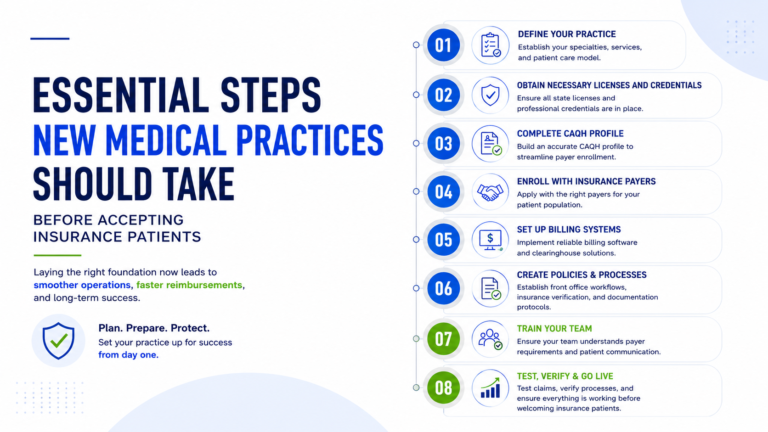
A strong foundation begins with organizing all provider and business documentation in advance. New practices should ensure they have updated medical licenses, DEA certificates, malpractice insurance, NPI registration, business formation documents, W-9 forms, and accurate practice location details ready before starting enrollment applications.
CAQH profile setup is another essential step. Since most insurance payers rely on CAQH for provider verification, maintaining an accurate and fully completed profile helps speed up credentialing timelines and reduces administrative complications.
New practices should also carefully decide which insurance networks align with their target patient population and business goals. Participating with every payer may not always be the best strategy. Evaluating reimbursement rates, patient demographics, local competition, and network demand can help practices make smarter enrollment decisions.
In addition to credentialing, practices should prepare operational systems that support patient scheduling, insurance verification, billing workflows, HIPAA compliance, and electronic medical records. Administrative inefficiencies during the launch phase can negatively impact both patient experience and revenue generation.
Many new providers choose to work with credentialing and enrollment specialists to simplify the process and avoid common errors. Professional support can help practices track applications, communicate with payers, monitor deadlines, and reduce delays that often occur with incomplete submissions.
Launching a successful healthcare practice requires more than clinical expertise. Proper credentialing, payer enrollment, and operational preparation are critical for creating a stable financial foundation and delivering a smooth patient experience from day one.
Practices that invest in these early steps position themselves for stronger growth, faster reimbursements, and long-term success in an increasingly competitive healthcare market.