


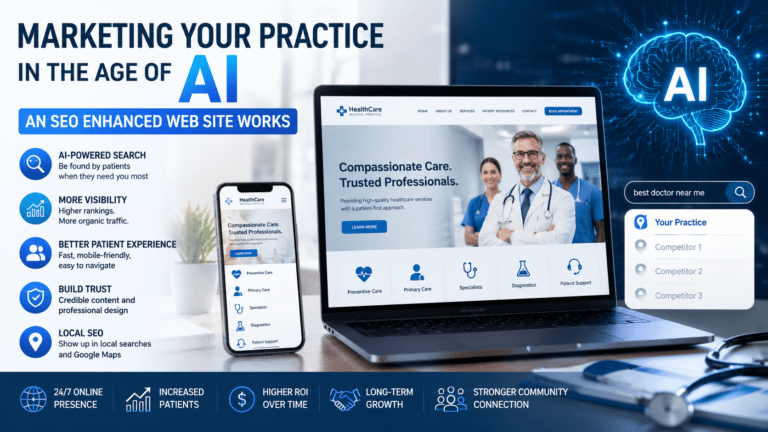
Healthcare marketing has changed dramatically over the last few years. In the past, many medical practices relied heavily on referrals, print advertising, or word-of-mouth marketing to attract new patients. While referrals still matter, today’s patients often begin their search online. In the age of artificial intelligence and advanced search engines, having an SEO-enhanced website is no longer optional for healthcare practices — it is essential.
Patients now expect quick answers, easy navigation, mobile-friendly experiences, and trustworthy information before they ever call a clinic. Search engines like Google use AI-powered systems to evaluate websites based on quality, speed, relevance, user experience, and authority. Practices that ignore these changes risk becoming invisible online, even if they provide excellent patient care.
An SEO-enhanced website helps medical practices appear in search results when potential patients are actively searching for services. Whether someone searches for “family doctor near me,” “physical therapy clinic,” “medical billing support,” or “urgent care in my area,” search engine optimization helps connect patients with the right provider.
Modern SEO is no longer just about keywords. AI-driven search algorithms now analyze user intent, content quality, website structure, loading speed, mobile usability, and overall trustworthiness. This means healthcare websites must provide real value, not just marketing language.
A professionally built healthcare website creates confidence immediately. Patients judge credibility within seconds of visiting a site. If the website is outdated, slow, difficult to navigate, or missing information, many users simply leave and continue searching elsewhere.
A strong website should clearly explain:
- services offered
- provider information
- office location
- appointment options
- insurance details
- patient resources
- contact information
Clear communication improves both patient trust and search engine visibility.
Website speed has also become extremely important. AI-powered search engines reward websites that load quickly and provide smooth user experiences across desktop and mobile devices. Slow-loading pages can reduce rankings and increase bounce rates. Many practices lose potential patients simply because their websites take too long to load.
Mobile optimization is equally critical. Most healthcare searches now happen on smartphones. Patients want to find information quickly while at work, at home, or even during emergencies. A responsive mobile-friendly design improves accessibility and increases patient engagement.
Content also plays a major role in modern healthcare marketing.
Educational articles, FAQs, service pages, and helpful resources allow practices to demonstrate expertise and build authority online. Search engines favor websites that consistently provide useful, accurate, and relevant information for users. This is especially important in healthcare, where trust and credibility are major ranking factors.
Artificial intelligence has also changed how search engines understand local intent. Local SEO strategies help practices appear in Google Maps results and local searches. Optimized service pages, accurate business listings, location-based keywords, and consistent practice information improve visibility within local markets.
Another major advantage of SEO-enhanced websites is long-term marketing value.
Unlike paid advertising, which stops generating leads once the budget ends, SEO creates ongoing visibility over time. A well-optimized healthcare website can continue attracting patients month after month through organic search traffic.
In today’s competitive healthcare environment, practices must think beyond simply having a website. The website should function as an active marketing and patient acquisition tool.
Artificial intelligence will continue reshaping digital marketing, but one thing remains clear: search engines prioritize user experience and trustworthy content. Healthcare practices that invest in professional websites, strong SEO foundations, fast performance, and quality content position themselves for long-term success.
At MedEx Practice Solutions, we understand the growing importance of digital visibility for healthcare organizations. An SEO-enhanced website is more than just an online brochure — it becomes the digital front door of the practice.
In the age of AI-driven search, patients are searching smarter than ever. The practices that adapt, optimize, and communicate clearly online will continue to grow, attract new patients, and strengthen their presence in an increasingly digital healthcare world.