



For healthcare providers in the United States, provider credentialing is one of the most important parts of starting or growing a medical practice. Without proper credentialing, providers may not be able to participate with insurance networks, receive reimbursements, or begin treating patients under certain health plans. Even highly qualified physicians and healthcare professionals can experience serious financial delays if credentialing is not handled correctly.
Many new clinics underestimate how complex the credentialing process can become.
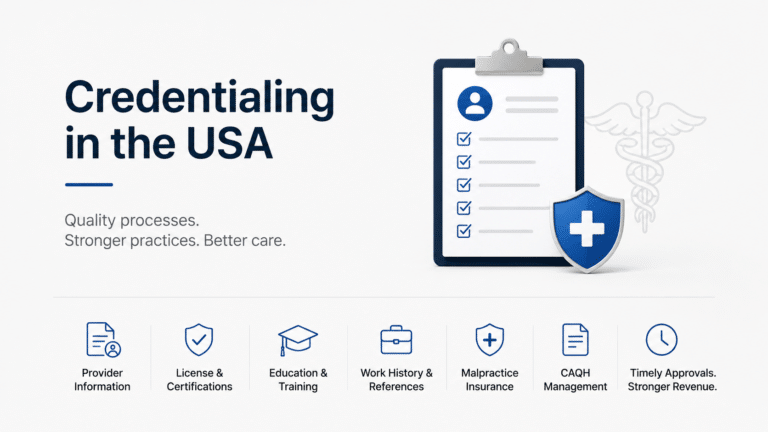
Credentialing involves verifying a provider’s education, licenses, certifications, training, work history, malpractice coverage, and professional background before insurance companies approve participation. Every payer has different requirements, timelines, and documentation standards. Missing information or small mistakes can delay approvals for weeks or even months.
In the United States healthcare system, delayed credentialing directly affects revenue.
A clinic may open its doors and begin operating, but if providers are not fully credentialed with insurance companies, claims may be denied or delayed. This creates cash flow problems during one of the most financially sensitive stages of a practice’s growth.
That is why organized credentialing processes are critical.
Quality credentialing starts with preparation. Providers should gather all required documentation early, including:
- medical licenses
- DEA certificates
- board certifications
- malpractice insurance
- CAQH information
- NPI numbers
- work history
- references
Keeping this information organized and updated helps reduce delays during payer enrollment.
CAQH management is especially important in the United States. Many insurance companies rely on CAQH profiles to review provider information during credentialing. Incomplete or outdated CAQH profiles often slow the approval process significantly.
Healthcare organizations should also track credentialing deadlines carefully.
Each payer moves at a different speed. Some commercial insurance approvals may take several months depending on the state, specialty, or provider history. Medicare and Medicaid enrollments may also involve additional verification requirements. Without proper tracking systems, clinics can easily lose valuable time and revenue opportunities.
Strong communication is another key part of successful credentialing.
Insurance companies frequently request additional documentation, corrections, or clarification during the review process. Quick responses help prevent files from becoming inactive or delayed unnecessarily.
Many growing healthcare practices eventually realize that credentialing requires dedicated attention and specialized knowledge. Office managers and front desk teams are often already overwhelmed with scheduling, billing, patient communication, and operational responsibilities. Trying to manage complex credentialing tasks without experience can create costly errors.
Poor credentialing management can lead to:
- claim denials
- delayed reimbursements
- network participation issues
- compliance risks
- interrupted patient care
- lost revenue
On the other hand, organized credentialing systems create smoother operations and stronger financial stability.
Healthcare practices should also understand that credentialing is not a one-time task. Recredentialing, license renewals, payer updates, provider changes, and compliance monitoring require ongoing management throughout the life of the practice.
As the U.S. healthcare industry becomes more competitive, patients expect practices to accept their insurance plans quickly and efficiently. Delayed network participation can limit patient growth and reduce referral opportunities.
Technology and automation can help simplify parts of the credentialing process, but human oversight remains extremely important. Attention to detail, organized documentation, payer follow-up, and timeline management all play major roles in successful credentialing outcomes.
At MedEx Practice Solutions, we understand the challenges healthcare providers face with credentialing and payer enrollment across the United States. Proper credentialing support helps practices reduce delays, improve cash flow, and focus more on patient care instead of administrative stress.
In today’s healthcare environment, quality credentialing processes truly make the difference. A well-managed credentialing system supports faster approvals, healthier revenue cycles, and stronger long-term practice growth.