


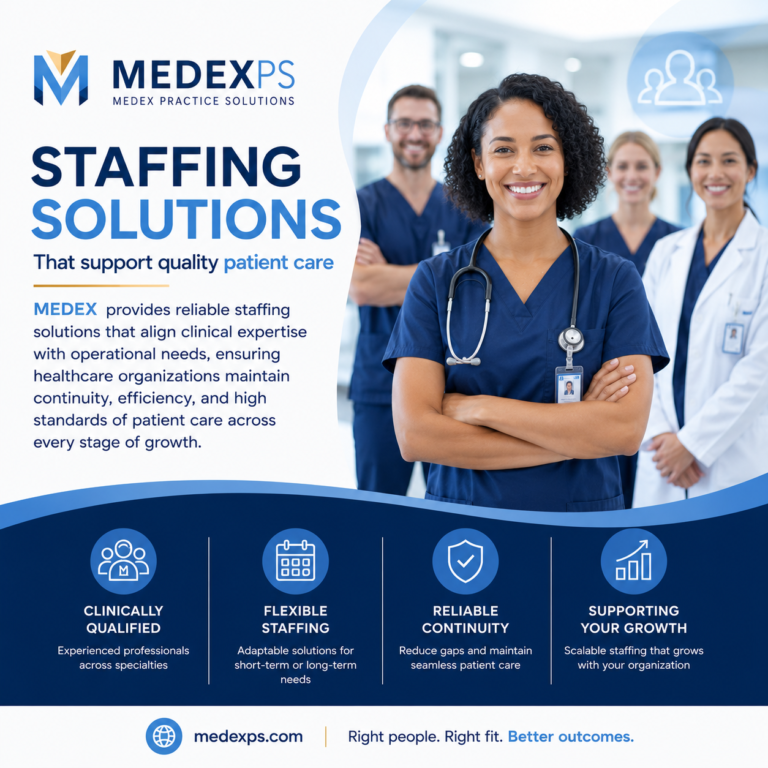
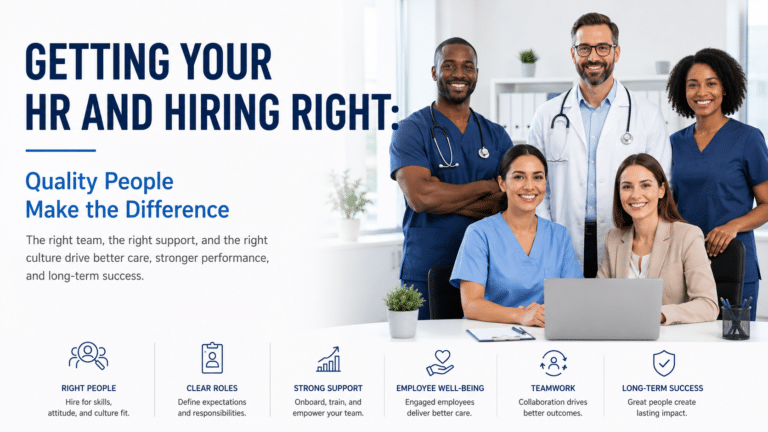
Every successful healthcare practice depends on more than technology, equipment, or office space. At the center of every strong clinic is a reliable team of people who help deliver quality patient care every single day. Hiring the right employees and building effective HR processes can make a major difference in the long-term success of a medical practice.
Many clinic owners focus heavily on startup costs, operations, and patient acquisition, but staffing decisions often become one of the most important factors affecting growth, reputation, and daily performance. Even the best-designed healthcare practice can struggle if the wrong people are hired.
Patients remember how they are treated.
Front desk staff, medical assistants, billing specialists, nurses, office managers, and support teams all contribute to the patient experience. Professional, friendly, and organized employees help patients feel comfortable and confident in the practice. Poor communication, scheduling mistakes, negative attitudes, or high employee turnover can quickly damage patient trust.
Quality hiring starts with understanding the real needs of the practice.
Many healthcare organizations hire too quickly simply because they feel understaffed or overwhelmed. Rushed hiring decisions often create bigger problems later. A careful hiring process helps practices identify candidates who not only have the right technical skills, but also fit the culture and values of the organization.
In healthcare, attitude and reliability matter just as much as experience.
A highly skilled employee who struggles with teamwork, communication, or professionalism can negatively affect the entire office environment. On the other hand, motivated employees with strong work ethics often become valuable long-term team members even if additional training is needed.
Clear job descriptions also improve hiring outcomes.
Employees should understand:
- responsibilities
- performance expectations
- work schedules
- communication standards
- patient service expectations
Clear expectations reduce confusion and help create accountability within the organization.
Strong HR systems are equally important after hiring.
Many healthcare practices focus on recruitment but neglect employee onboarding, training, and retention. New employees should receive proper orientation, workflow training, and support during the early stages of employment. Organized onboarding improves confidence and reduces mistakes.
Employee retention is another major challenge in today’s healthcare environment.
Staff shortages, burnout, and increasing workloads continue affecting healthcare organizations across the country. Replacing employees is expensive and time-consuming. Recruitment costs, training expenses, operational disruptions, and productivity loss can quickly add up.
Practices that invest in employee satisfaction often experience better stability and stronger long-term performance.
Simple improvements can make a significant difference:
- respectful communication
- organized leadership
- realistic workloads
- growth opportunities
- clear processes
- supportive workplace culture
Employees who feel valued are more likely to stay engaged and provide better patient service.
Technology and automation can also help HR operations become more efficient. Scheduling systems, digital onboarding, training documentation, payroll integration, and communication tools can reduce administrative stress and improve organization throughout the practice.
Healthcare compliance is another reason proper HR management matters. Employee documentation, certifications, training records, workplace policies, and labor requirements must all be managed carefully to reduce legal and operational risks.
As healthcare becomes more competitive, patients increasingly compare not only providers, but also overall patient experience. A practice with strong staffing, organized workflows, and positive team culture often performs better than competitors with larger facilities but weaker operations.
At MedEx Practice Solutions, we understand that successful healthcare practices are built by strong teams working within well-organized systems. Hiring the right people, supporting employees properly, and developing effective HR strategies create a foundation for better patient care and stronger business performance.
In the end, medical equipment, software, and marketing all play important roles, but people remain the true difference-makers inside every healthcare organization. Quality people create quality experiences, and those experiences help practices grow, retain patients, and succeed over the long term.